
The Fractional Sales Leaders Who Will Win The Next Five Years
You can be a very good Sales Leader and still fail to build a successful Fractional Sales Agency.
Not because you cannot get results for clients.
Because building your own pipeline is a different job.
Most people start the same way. A former client, colleague or referral opens the door. They do good work, get busy and their own business development goes quiet.
Then the client leaves.
And they are back looking for work.
That is fine at the beginning. It is how most businesses get started. But if that is still the model two or three years later, you have not built an agency. You have built a collection of contracts, all dependent on you being available and the next opportunity arriving at the right time.
That is a fragile place to be.
The Old Model Is Getting Harder
There are more experienced salespeople moving into fractional work. Most have good CVs, plenty of sales experience and a credible LinkedIn profile.
At the same time, business owners have more information at their fingertips than ever before.
They can ask AI for a sales strategy, a pipeline review, an outbound sequence or a commission plan. They can read hundreds of posts telling them how to fix their sales team.
AI has not suddenly made Sales Leaders irrelevant.
But it has made the “I have twenty years of experience and some good ideas” pitch less compelling on its own.
If a prospect cannot see a meaningful difference between you and the next five Fractional Sales Directors, they will compare you the only way they know how: by price, availability and how flexible you are prepared to be.
That is not a good place to build a business from.
You Need More Than A Profile
LinkedIn matters. Content matters. Outreach matters.
But they are only useful if they lead somewhere.
Too many Fractional Sales Leaders treat LinkedIn as the strategy. They post when they have time, connect with a few people, send the odd message and hope it produces something.
Sometimes it will.
But that does not give you any control over your pipeline.
The objective is to become known in a defined market before somebody urgently needs help.
That might be a local business community, an industry, a type of founder or a specific commercial problem you solve well.
When someone in that market says, “We need to sort sales out,” you want people to think of you.
Not because you happened to message them that day.
Because they have seen you around. They know what you are about. They have heard you speak, met you in person or been introduced by somebody they trust.
That is how you stop being just another person offering fractional support.
Get People In The Room
There is a lot of noise online now, and there will be more of it.
That makes real conversations more valuable.
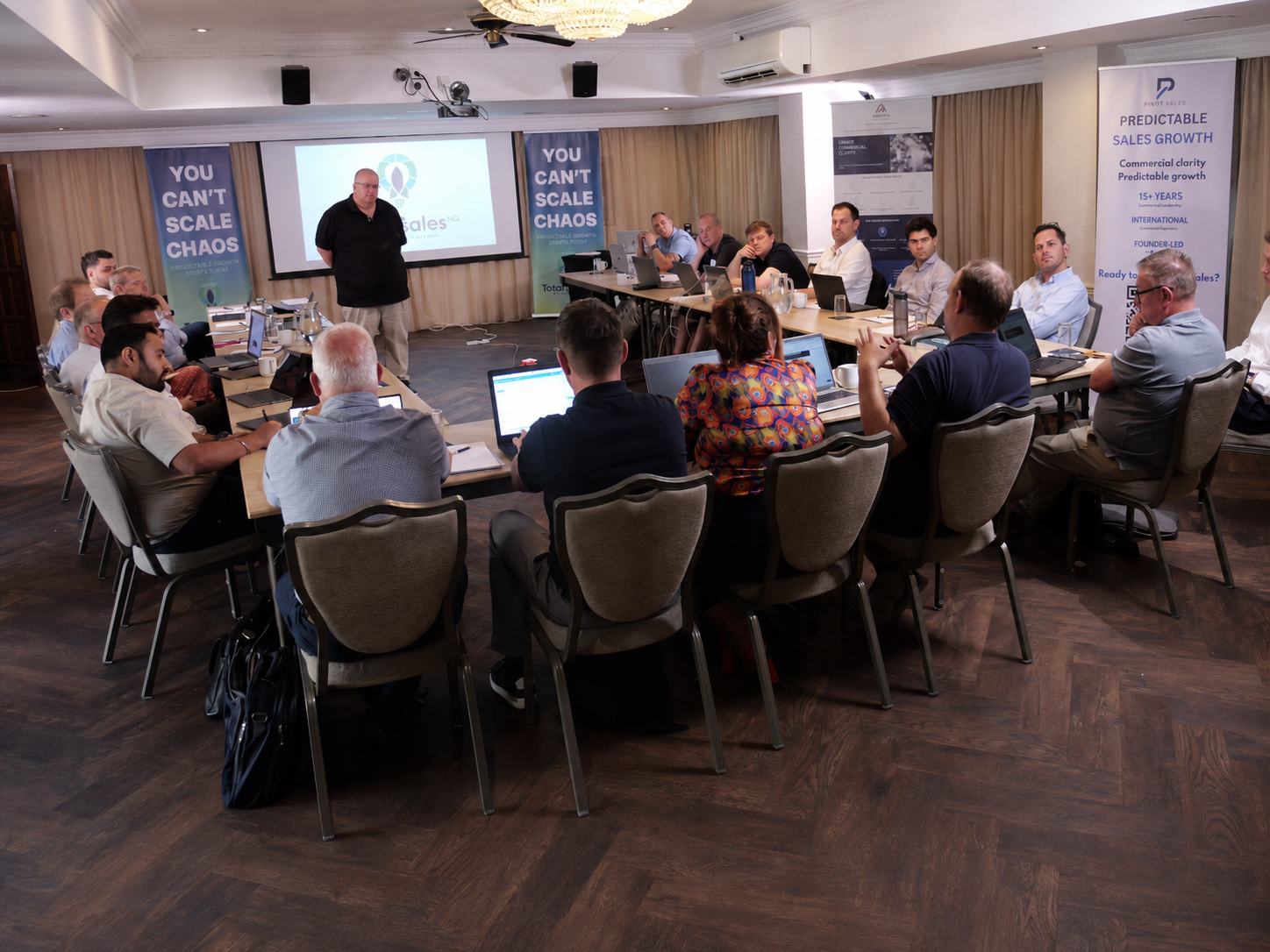
A regular roundtable, lunch-and-learn or small business event gives you something most online activity cannot: an opportunity for people to experience you.
They get to see the questions you ask. They hear how you challenge a business owner without making them defensive. They get a feel for whether you understand the commercial issues they are dealing with.
You cannot fully show that in a LinkedIn post.
A good event is not a networking function where everyone walks around swapping business cards.
It is a useful conversation around a problem the people in the room actually care about.
Done properly, it gives you a reason to meet the right people, brings potential clients and referral partners into the same room, and creates a natural reason to follow up afterwards.
That is a far better starting point than asking a stranger whether they would be open to a quick chat.
Move Fast On Activity. Be Patient With The Outcome.
This is the bit that trips people up.
They wait too long to start. They want the perfect LinkedIn profile, the perfect event format and the perfect message before they invite anyone.
Then, when they finally do something, they expect results immediately.
That is backwards.
Start the activity quickly.
Choose a topic. Invite people. Run the room. Follow up. Listen carefully to what landed and what did not. Make the next one better.
But do not expect a single event or a month of content to change your business.
It takes time for people to notice you. It takes time for them to decide they trust you. It takes time for the right opportunity to come up.
For the first few months, you may put in a lot of work for little obvious return. You may invite fifty people and have ten attend. You may have several good conversations that go nowhere immediately.
That is not failure. That is the price of building something most people are unwilling to build.
The people who do the work now will have the relationships, referral partners and reputation that others are trying to create later, when they are already desperate for pipeline.
The Collective Framework
This is the thinking behind the Collective.
It is not about turning Sales Leaders into content creators or event managers.
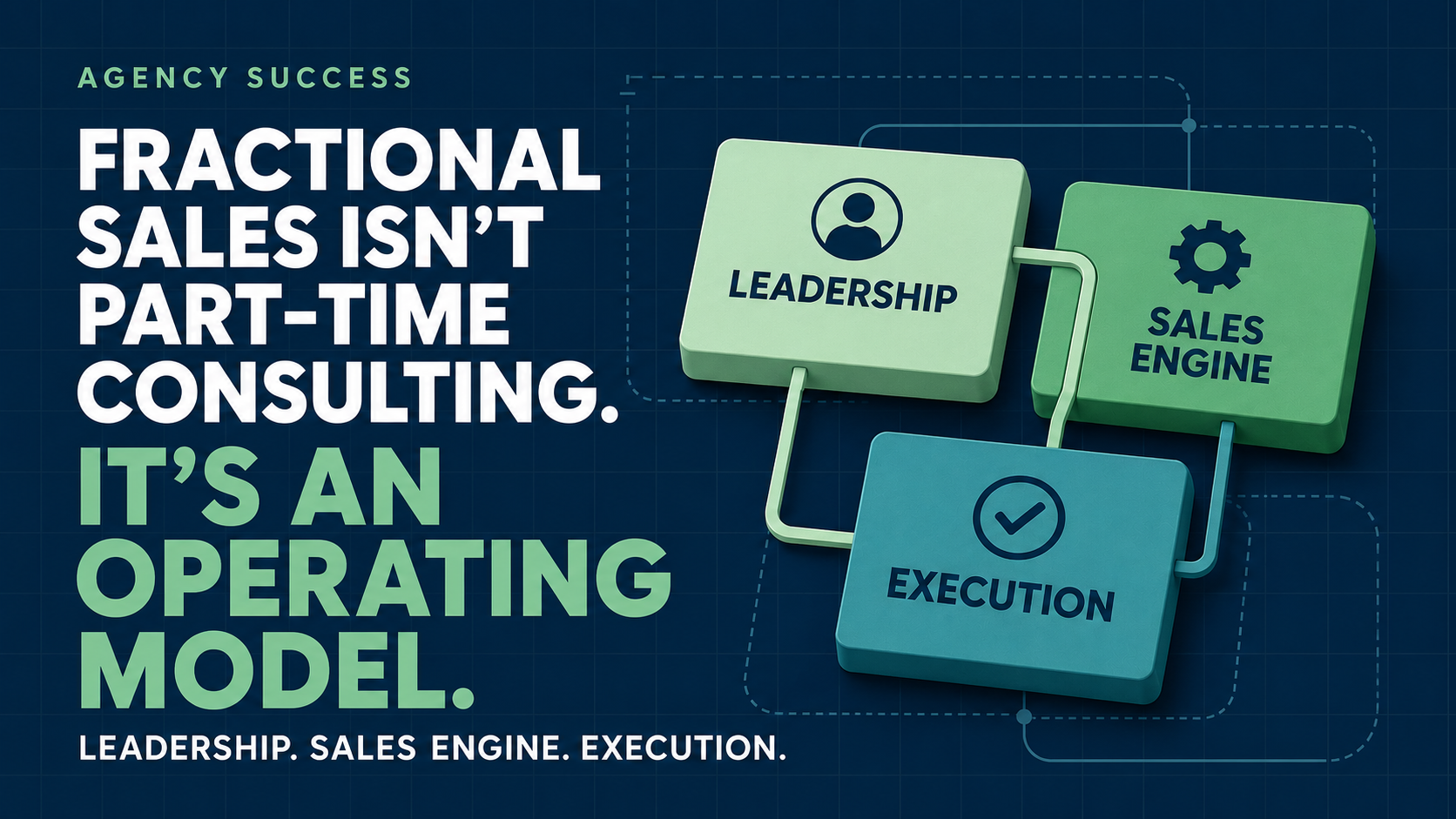
It is about helping them build a more complete commercial model around their experience.
First, get clear on who you are trying to be known by and what you want to be known for.
Then use content, outreach and campaigns to start the right conversations.
Bring those conversations offline through regular roundtables, lunch-and-learns and events.
Follow up with a clear process that leads into workshops, implementation work and ongoing Fractional Sales Leadership.
Underneath that sits the infrastructure most people never build properly on their own: campaigns, presentations, event formats, systems, Sales Co-Pilot support and a community of experienced people solving the same problems.
You keep your own name, your own market and your own client relationships.
You just stop trying to carry every part of the business yourself.
Decide What You Want To Build
There is nothing wrong with a small fractional practice built around a handful of clients.
But if you want to build an agency with consistent demand, better income security and room to grow beyond your own diary, you need to treat it like a business from the start.
The next few years will reward Fractional Sales Leaders who can build real relationships, lead meaningful conversations and demonstrate that they can turn sales theory into action.
The question is whether you are prepared to start building that now, before you need it.