The Sales Process Is Not the Product. The Outcome Is
How Fractional Sales Directors build a business that creates leverage, not another senior role dependent on their time.
One of the biggest mistakes a Fractional Sales Director can make is becoming the answer to every sales problem.
The client has a weak pipeline, so you get involved in prospecting.
Deals are stalling, so you jump into the important calls.
The CRM is a mess, so you start updating it.
Follow-up is inconsistent, so you take it on yourself.
The sales team needs direction, so every decision comes back to you.
At first, it can feel like progress. The client is getting value. You are close to the action. The business starts moving.
But if that is the model, you have not built a scalable Fractional Sales business.
You have created another senior role—one where the client depends on you to personally hold the sales function together.
That is not leverage. It is a trap.
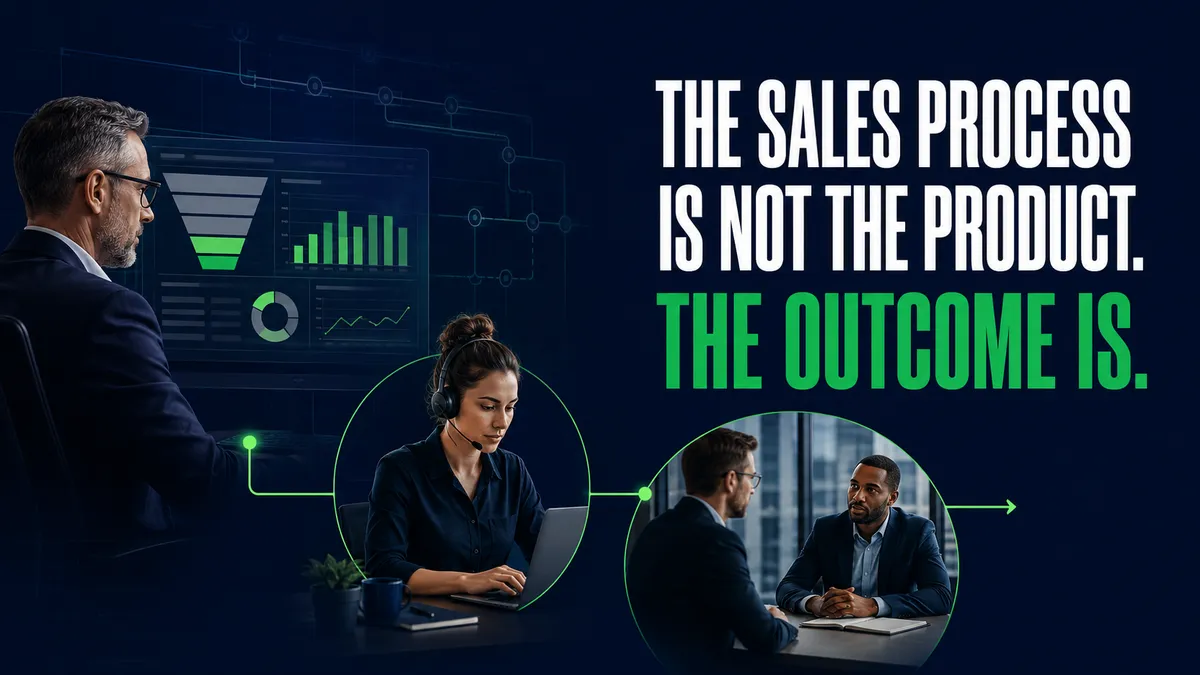
The process is not the product
Clients do need process.
Most SMEs are dealing with some version of Sales Chaos: unclear ownership, inconsistent follow-up, a CRM full of deals nobody trusts and salespeople working from their own version of the truth.
They need a clear sales process because it gives the business something it can see and manage.
Who are we targeting? What does a good opportunity look like? What happens after a first meeting? Who owns the next step? Where are deals getting stuck? What activity is required to create the next quarter's revenue?
That is the foundation.
But do not confuse the foundation with the result.
A documented process does not create sales. A CRM does not create sales. A tidy pipeline does not create sales.
They create visibility, accountability and control.
Sales is created when people execute well inside the process.
When they qualify properly. When they hear the hesitation in a prospect's answer and dig deeper. When they understand the real commercial problem. When they do not send a proposal until they have a decision process. When they trial-close, challenge assumptions and leave every conversation with a meaningful next step.
Those are the moments that move an opportunity closer to a decision.
That is why the aim is not simply to install a process. It is to build an environment where the process, the support and the people work together to create better outcomes.
The Engine creates the structure
The Sales Engine gives the client the commercial infrastructure they have usually been missing.
It clarifies the market, the offer, the sales stages and the standards for what happens next. It makes the pipeline visible. It creates a rhythm for review and accountability. It gives the founder a view of reality without requiring them to be involved in every deal.
This is where you create leverage as a Fractional Sales Director.
You are not paid to remember every follow-up or rebuild the pipeline from scratch each month. You install a way of working that makes good execution more likely and poor execution easier to spot.
The process needs to be simple enough that the team uses it, and strong enough that the business can manage it.
If it creates more complexity, more reporting and more administration for the sales team, it has missed the point.
The Co-Pilot protects high-value selling time
This is where many Fractional Sales Directors get caught.
They understand the need for a process, but then expect the salesperson to carry all of it.
Research the accounts. Build the lists. Keep the CRM current. Prepare the meeting. Send the follow-up. Chase internal information. Update reports. Coordinate the next step. Prospect for new business. Manage existing opportunities. Prepare proposals. Then, somehow, lead great commercial conversations.
It is not realistic.
And it is an expensive use of a capable salesperson's time.
The Co-Pilot is not there to replace the salesperson. They are there to create leverage around them.
They keep the data clean, prepare the information, protect follow-up, maintain the system and make sure the operational work continues when the business gets busy.
That creates consistency.
It means the sales team can spend more time where their experience makes the greatest difference: preparing for the right conversation, diagnosing the issue, qualifying the opportunity, building trust and leading a decision.
The sales process should make selling simpler. The Co-Pilot is a critical part of making that true.
The sales team owns the outcome
This is the distinction every Fractional Sales Director needs to be clear on.
You can enforce process through accountability.
Was the opportunity qualified? Was the meeting prepared? Was the next step agreed, owned and dated? Was the follow-up completed? Is the CRM current?
Those are reasonable, measurable standards.
But the sales team must own the outcome.
Did the meeting create urgency? Did the salesperson uncover the real problem? Did they gain access to the right stakeholder? Did they control the decision process? Did the conversation create movement?
You cannot manage those questions with a dashboard alone.
They require sales leadership.
They require call review, deal review, coaching and a willingness to deal with what is actually happening in the pipeline.
This is where an experienced Fractional Sales Director adds value. Not by becoming the client’s most expensive salesperson, but by raising the standard of execution across the team.
Your role is to connect the parts
A good sales process without support becomes administration.
A capable sales team without a process becomes dependent on individual memory and judgement.
A Co-Pilot without clear standards becomes busy work.
And coaching without visibility becomes opinion.
None of the elements work in isolation.
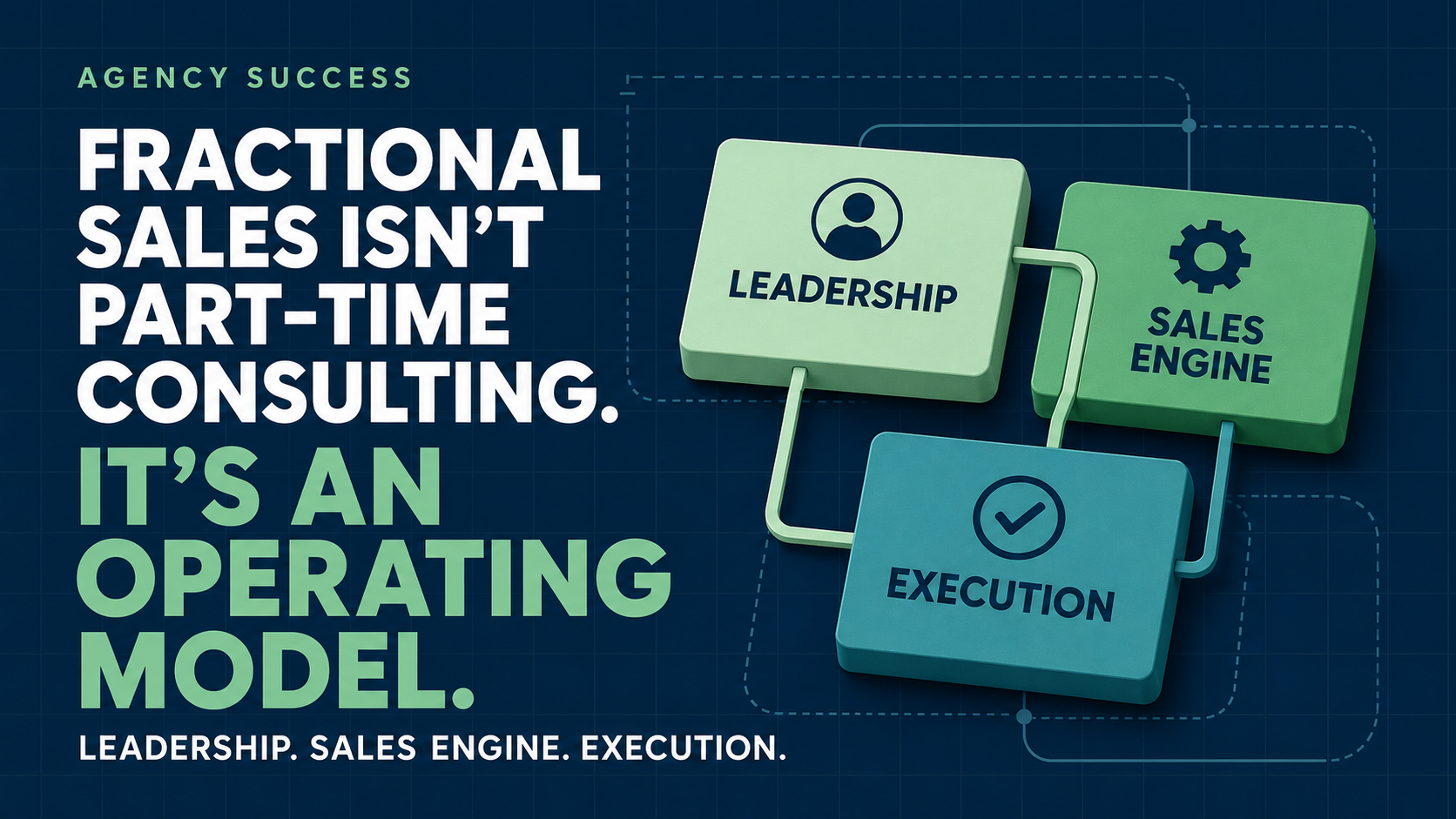
The Engine gives the client the structure.
The Co-Pilot creates leverage and consistency.
The sales team manages the outcomes.
The Fractional Sales Director coaches the standard of execution, manages the rhythm and makes sure the commercial system is improving over time.
That is every element working together.
It is also the difference between selling access to your time and delivering a commercial transformation.
Build a business that does not need you in every task
The real opportunity for a Fractional Sales Director is not to become part-time Head of Sales for a collection of clients.
It is to help businesses build the capability to create sales more predictably—without the founder, the internal sales team or you personally having to hold every part of the function together.
That is more valuable to the client.
It is more sustainable for the team.
And it gives you a business model that can grow without every new client demanding more of your diary.
Install the Engine.
Create leverage with the Co-Pilot.
Hold the process accountable.
Coach the standards that create outcomes.
That is how you move a client from Sales Chaos to predictable growth.
And it is how you build a Fractional Sales business worth owning.